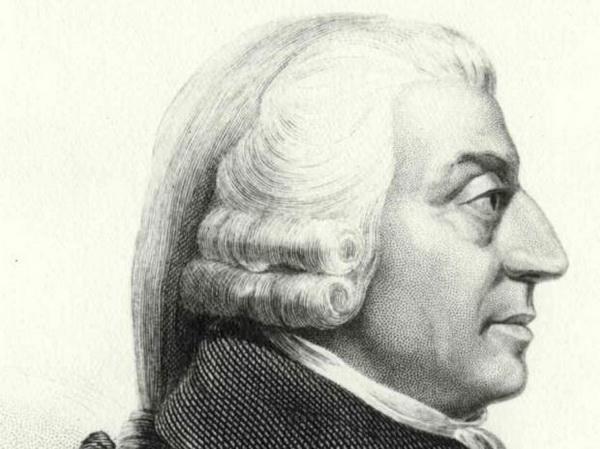
Smith then entered upon a period of extraordinary creativity, combined with a social and intellectual life that he afterward described as “ by far the happiest, and most honourable period of my life”. During the week he lectured daily from 7:30 to 8:30 am and again thrice weekly from 11 am to noon, to classes of up to 90 students, aged 14 and 16. (Although his lectures were presented in English, following the precedent of Hutcheson, rather than in Latin, the level of sophistication for so young an audience today strikes one as extraordinarily demanding.) Afternoons
were occupied with university affairs in which Smith played an active role, being elected dean of faculty in 1758; his evenings were spent in the stimulating company of Glasgow society.
were occupied with university affairs in which Smith played an active role, being elected dean of faculty in 1758; his evenings were spent in the stimulating company of Glasgow society.
Among his circle of acquaintances were not only remembers of the aristocracy, many connected with the government, but also a range of intellectual and scientific figures that included Joseph Black, a pioneer in the field of chemistry, James Watt, later of steam-engine fame, Robert Foulis, a distinguished printer and publisher and subsequent founder of the first British Academy of Design, and not least, the philosopher David Hume, a lifelong friend whom Smith had met in Edinburgh. Smith was also introduced during these years to the company of the great merchants who were carrying on the colonial trade that had opened to Scotland following its union with England in 1707. One of them, Andrew Cochrane, had been a provost of Glasgow and had founded the famous Political Economy Club. From Cochrane and his fellow merchants Smith undoubtedly acquired the detailed information concerning trade and business that was to give such a sense of the real world to The Wealth of Nations.


Комментариев нет:
Отправить комментарий